
The Complete Guide to 1995 Topsun Pokémon Cards: The History and Secrets of the Million-Yen Vintage Trading Cards
Before the official TCG, there was Topsun. 🍬 Dive into the history of the 1995 Pokémon Card Gum series, the secret behind the "No Number" errors, and where collectors hunt for them today!
Before the official Pokémon Trading Card Game (TCG) was released in October 1996, a "phantom" card series quietly lined the shelves of Japanese penny candy stores (dagashiya). This was the "Topsun Pokémon Card Gum" manufactured by the Osaka-based Top Seika Co., Ltd. Today, certain error cards from this series are traded for millions of yen, attracting passionate devotion from collectors worldwide.
What is Topsun? The Origins of the "1995" Print
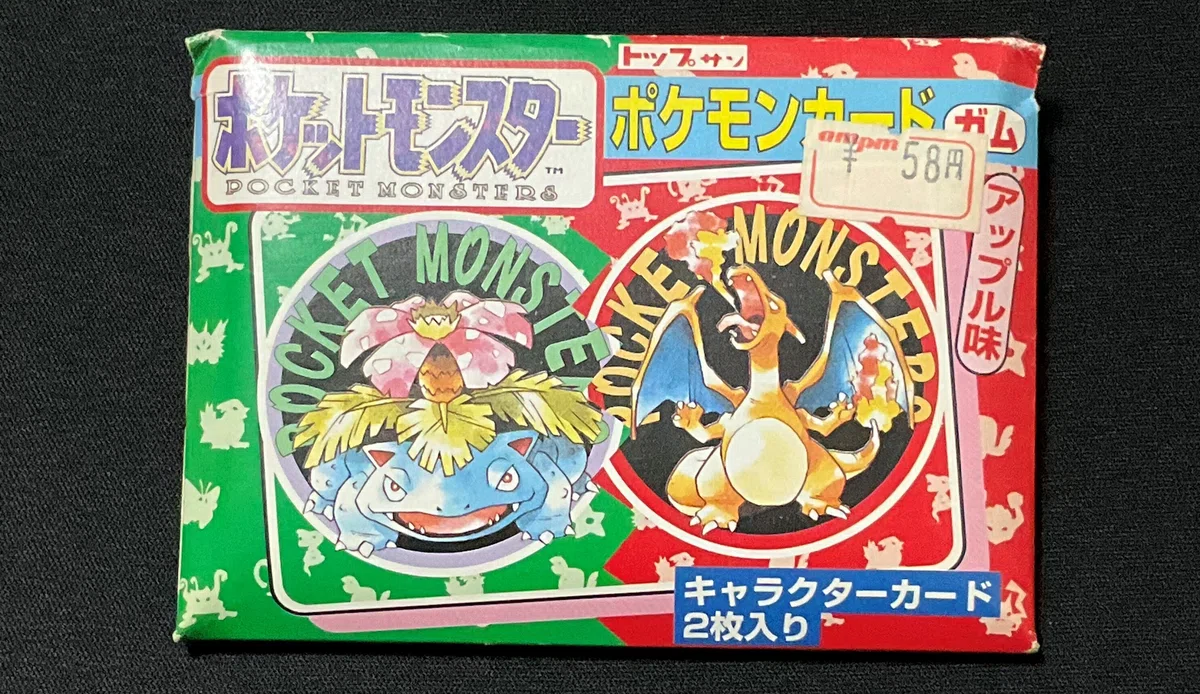
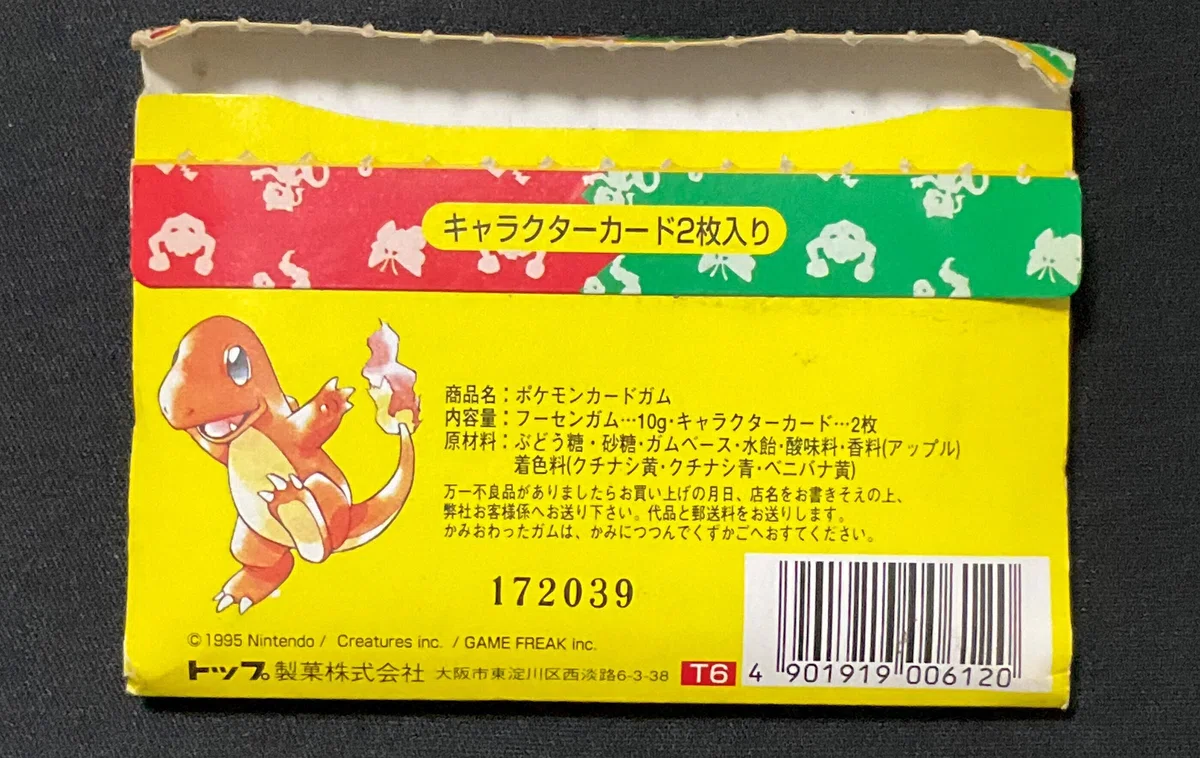
Top Seika had previously achieved massive success producing candy toys under a licensing agreement with Nintendo for the Super Mario franchise. Leveraging this relationship, they began producing early Pokémon merchandise shortly after the release of the original Pokémon Red and Green Game Boy games. Sold for just 58 yen at the time, each package contained one piece of apple-flavored bubble gum (10g) and two character cards. The cards feature the year "1995" printed on the front, which is believed to indicate the year the licensing agreement was established. In an era before the official TCG existed, these cards circulated primarily among children as some of the very first Pokémon collectibles.
Unique Specifications of the Original Generation
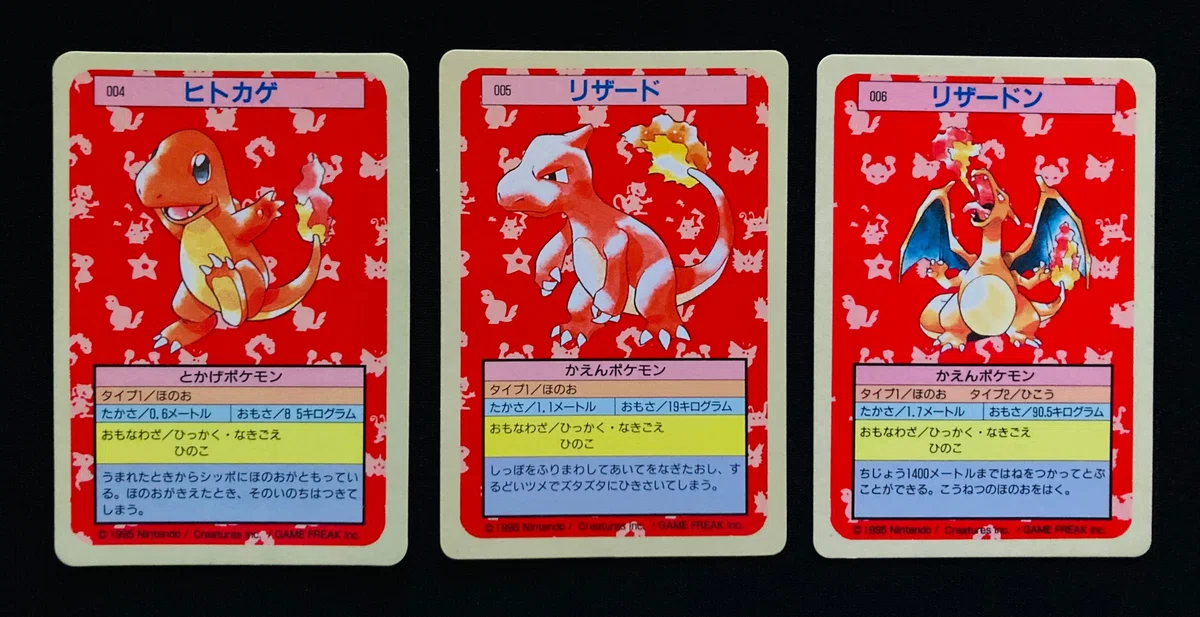
The lineup features 150 of the original Pokémon, excluding Mew. Because the product was aimed at children, the Pokédex descriptions on the back are written entirely in hiragana. In addition to the normal cards, there were 16 holographic "Crystal Prism" cards. A particularly unique feature is the "Main Moves" (おもなわざ) section; rather than quoting the official Pokédex, Topsun used its own original specifications where a Pokémon's moves do not change even after evolving. As a result, fully evolved powerhouses like Charizard are comically listed as fighting with "Scratch, Growl, and Ember."
The "Three Variations" That Drive Collectors Crazy
Topsun cards feature different specifications depending on when they were printed, directly tying into their modern rarity and market price. They are broadly divided into three types:
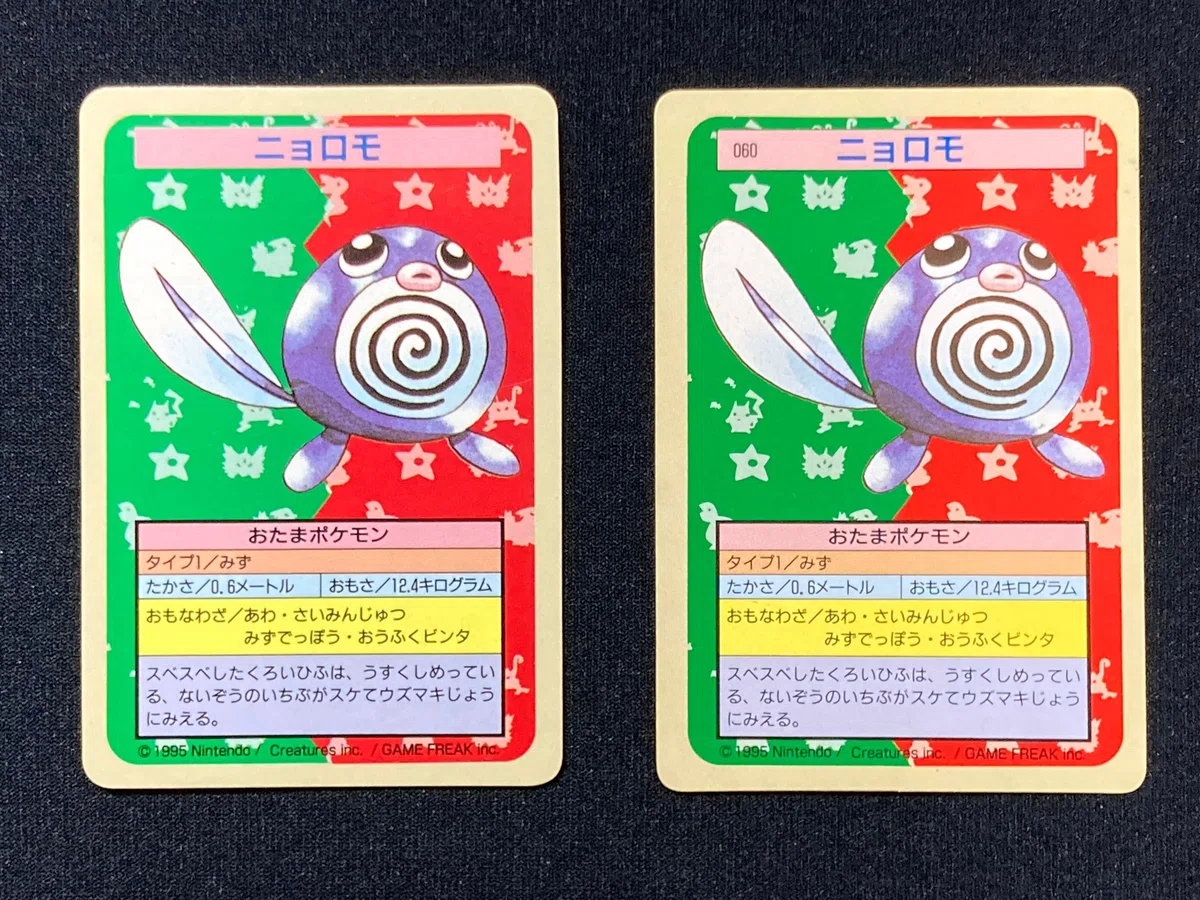
No Number Error (First Edition): Only 50 specific Pokémon from the earliest print run were printed without their Pokédex number on the top left of the card. Referred to by grading companies like PSA as "N/A BLUE BACK" or "No Number Error," this variation is the rarest on the market.
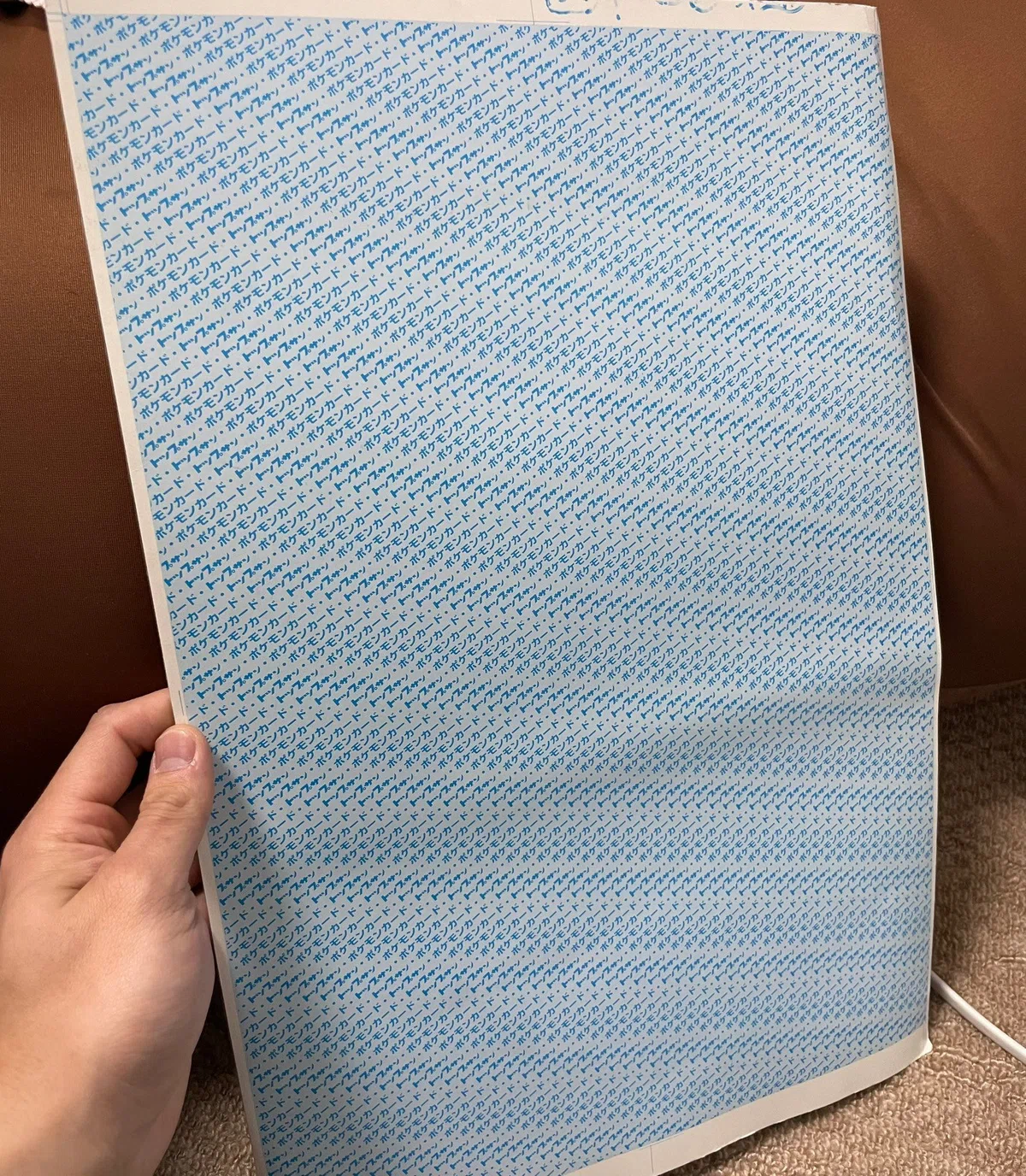
Blue Back (Corrected Reprint): In this version, the missing Pokédex numbers were added. The repeating "Topsun Pokémon Card" text on the back is printed in blue ink. The front of the card features a distinct glossy coating that is highly resistant to organic solvents like ethanol and acetone, though the soft material itself is susceptible to surface scratches.
Green Back (Final Edition): A major specification change later occurred, altering the text on the back to green ink. At the same time, the front coating was changed to a matte, smooth texture. This new finish lacks the chemical resistance of the Blue Backs, meaning the ink can rub off much more easily. This change is presumed to be the result of cost-cutting or production efficiency measures, making Green Backs the most heavily circulated variation on the market.
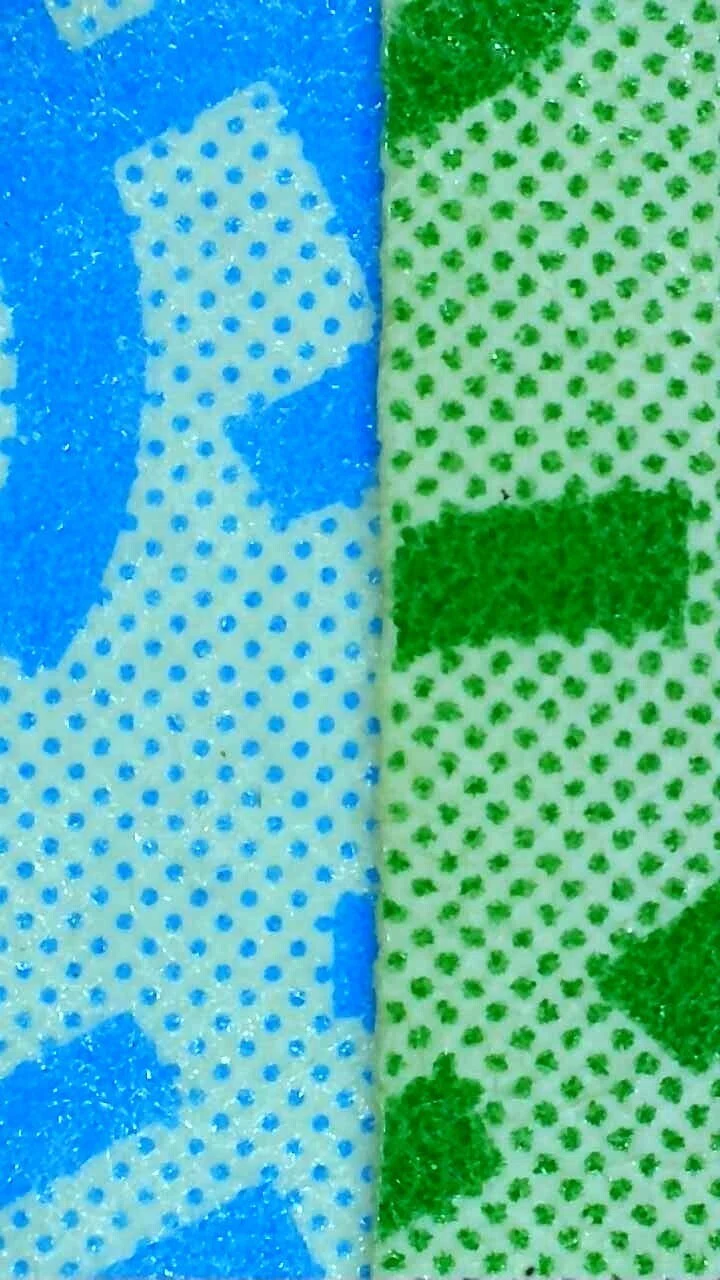
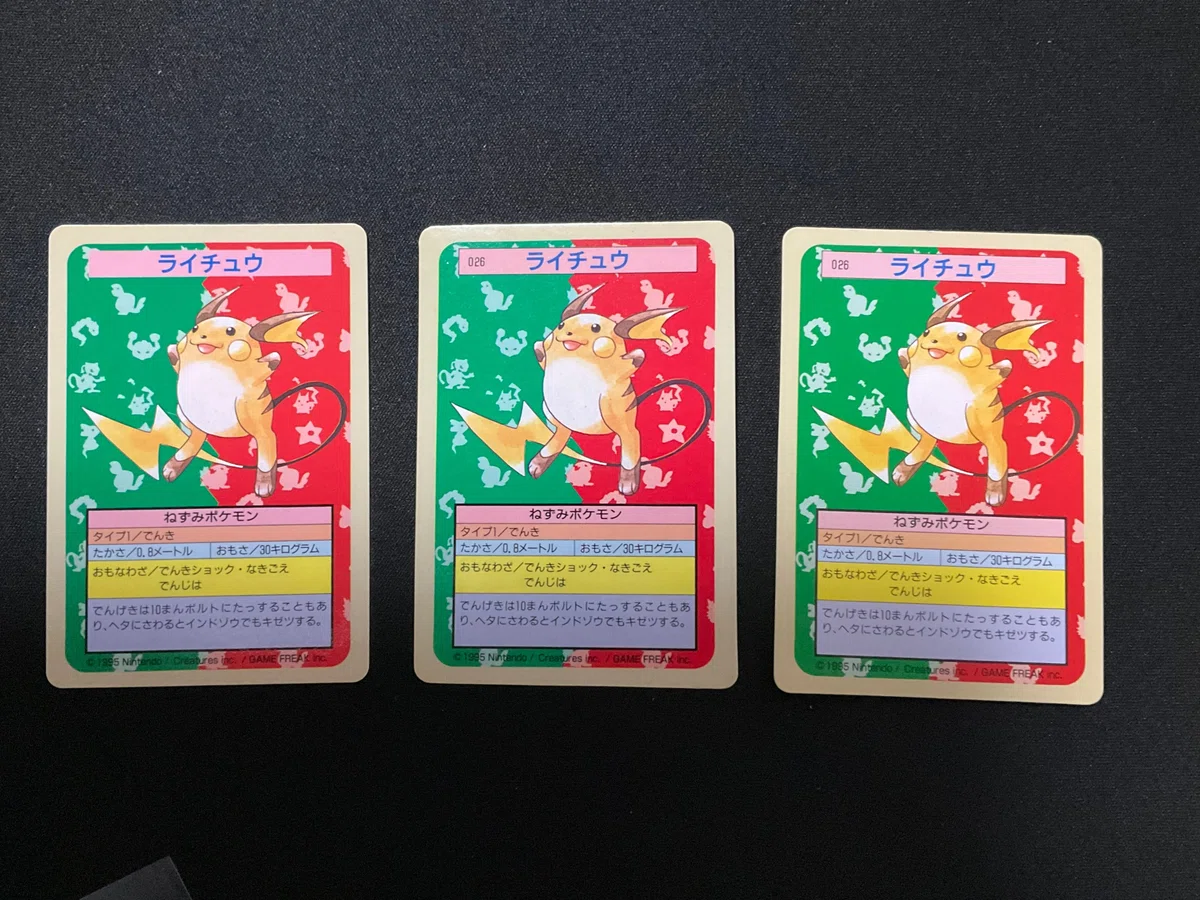
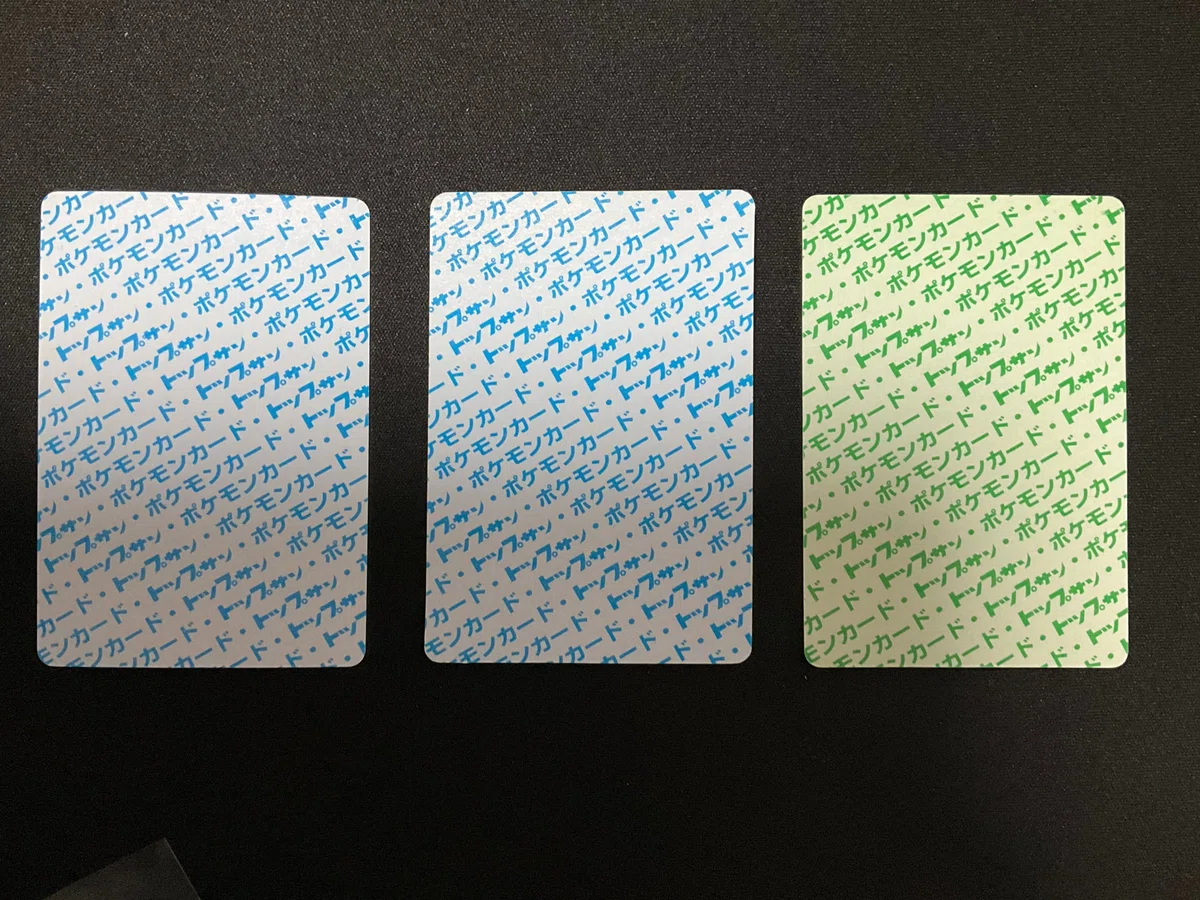
The Solved Mystery of the "50 No Number" Cards
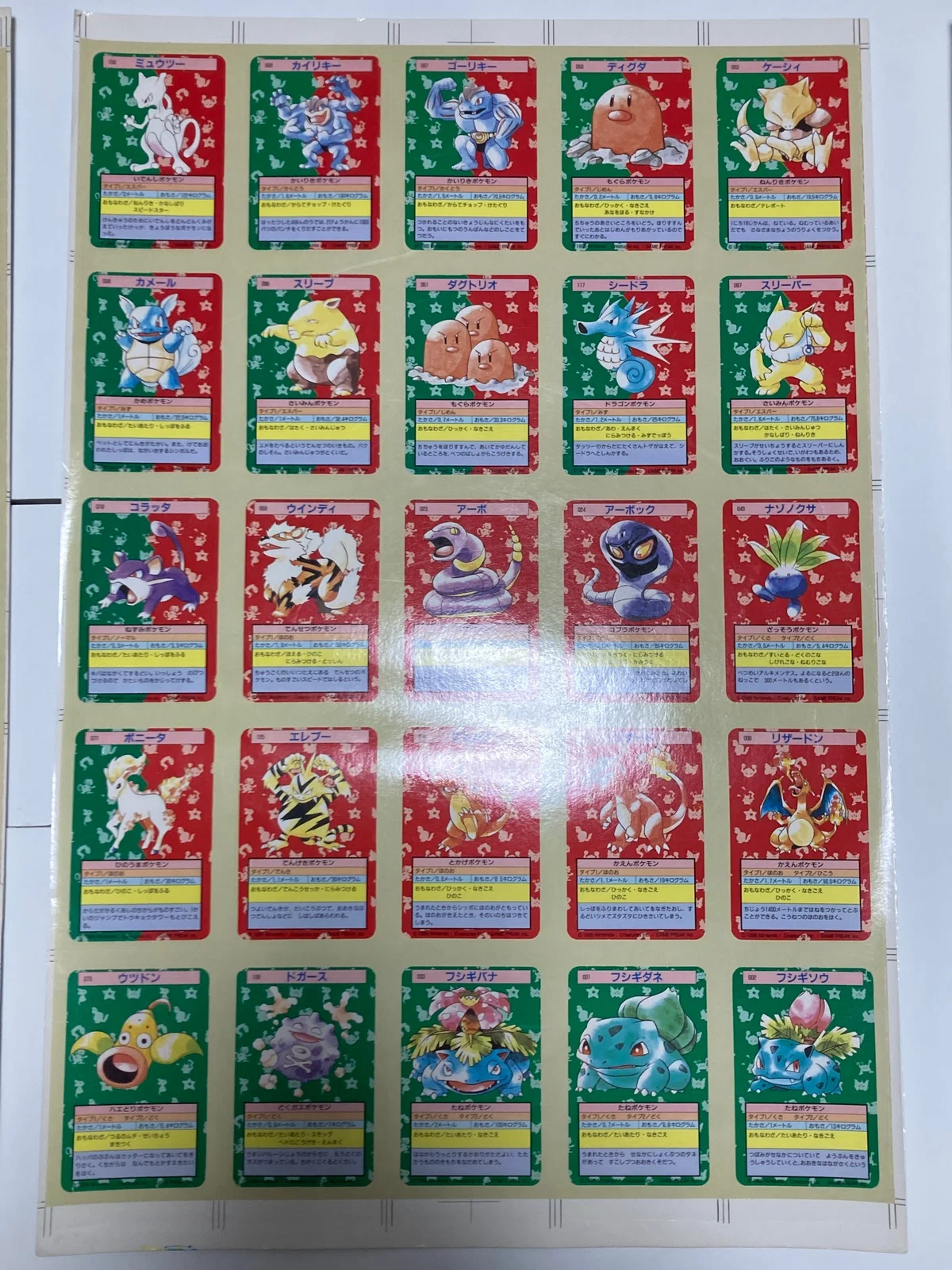
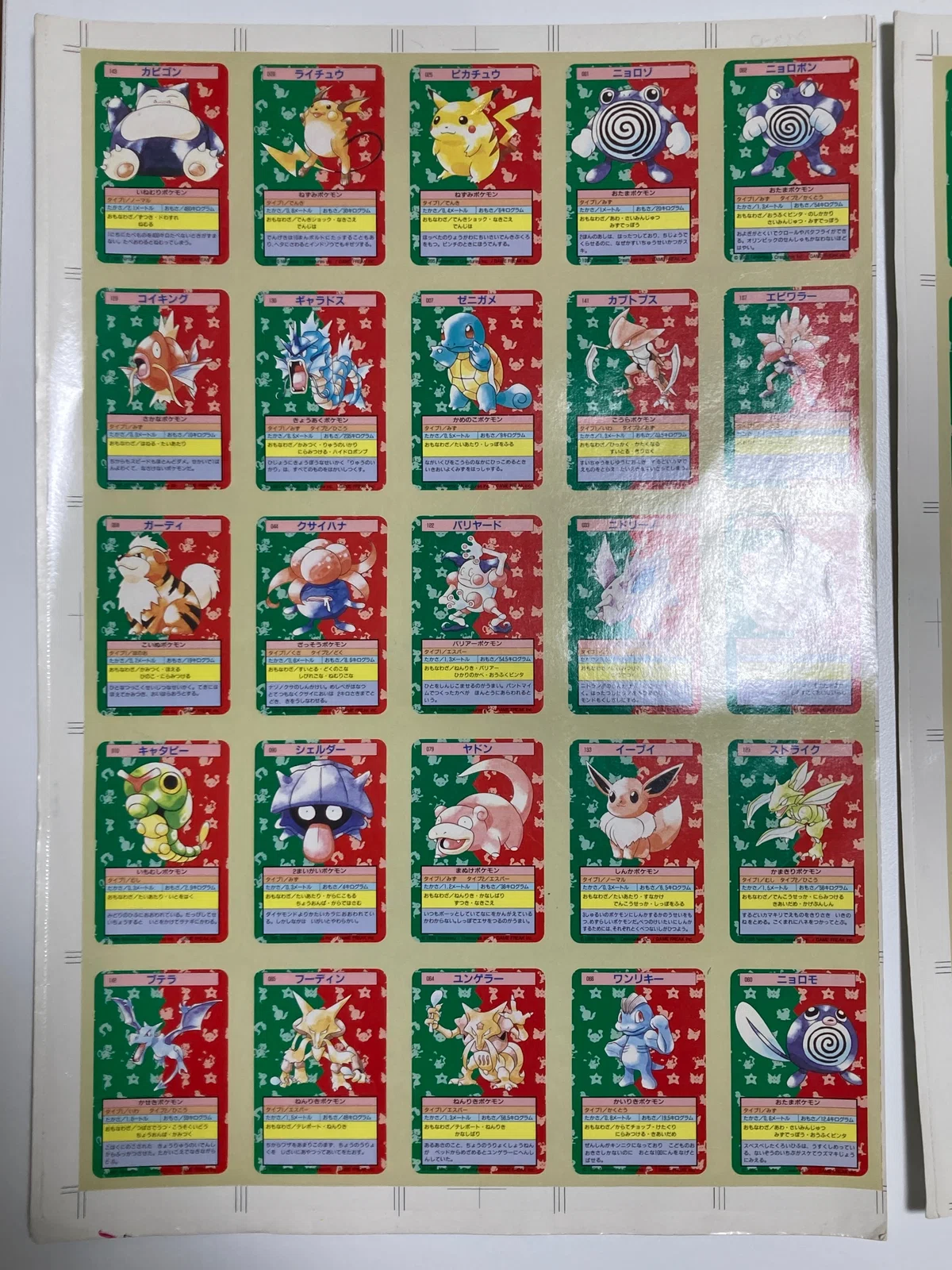
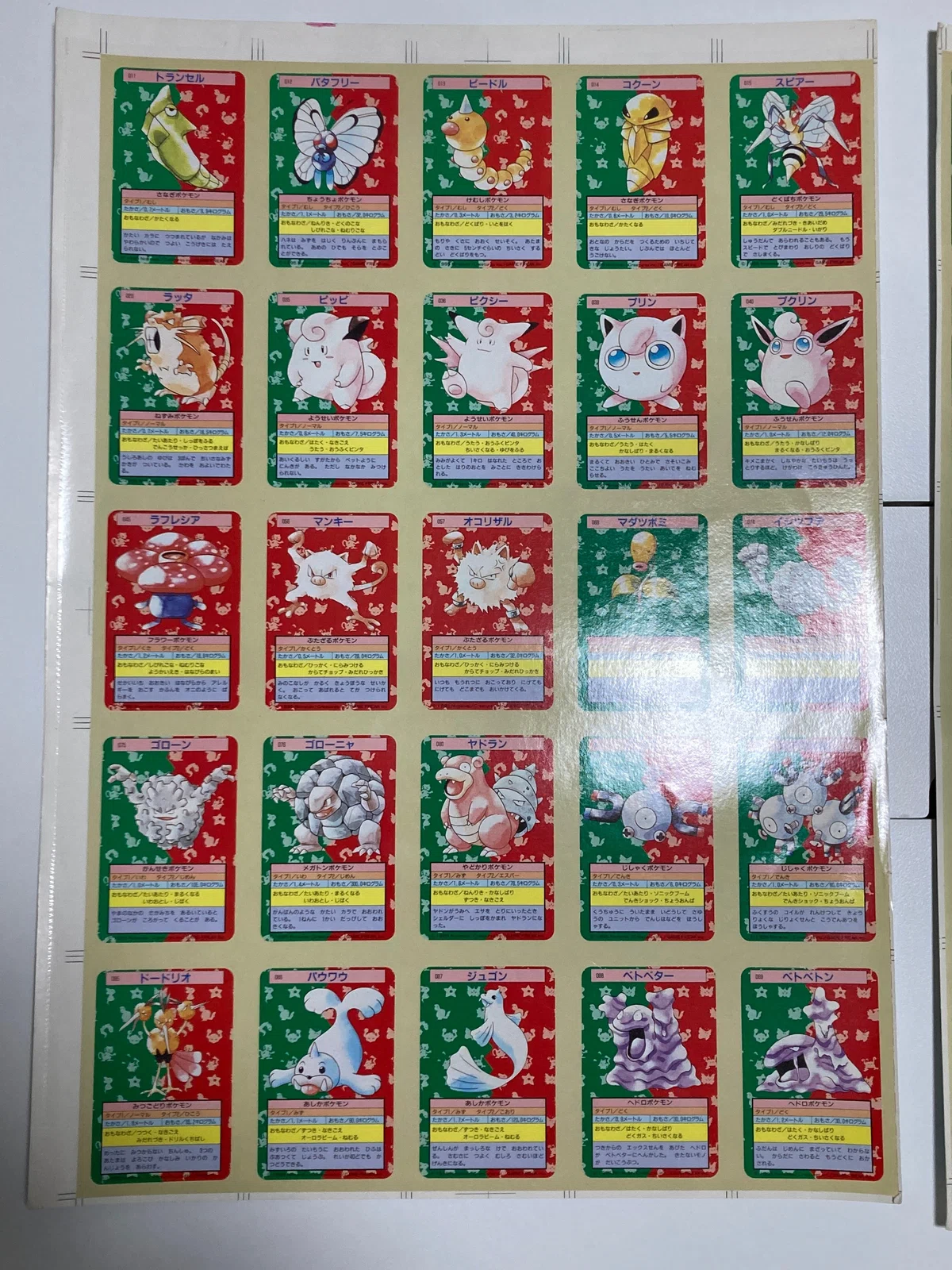
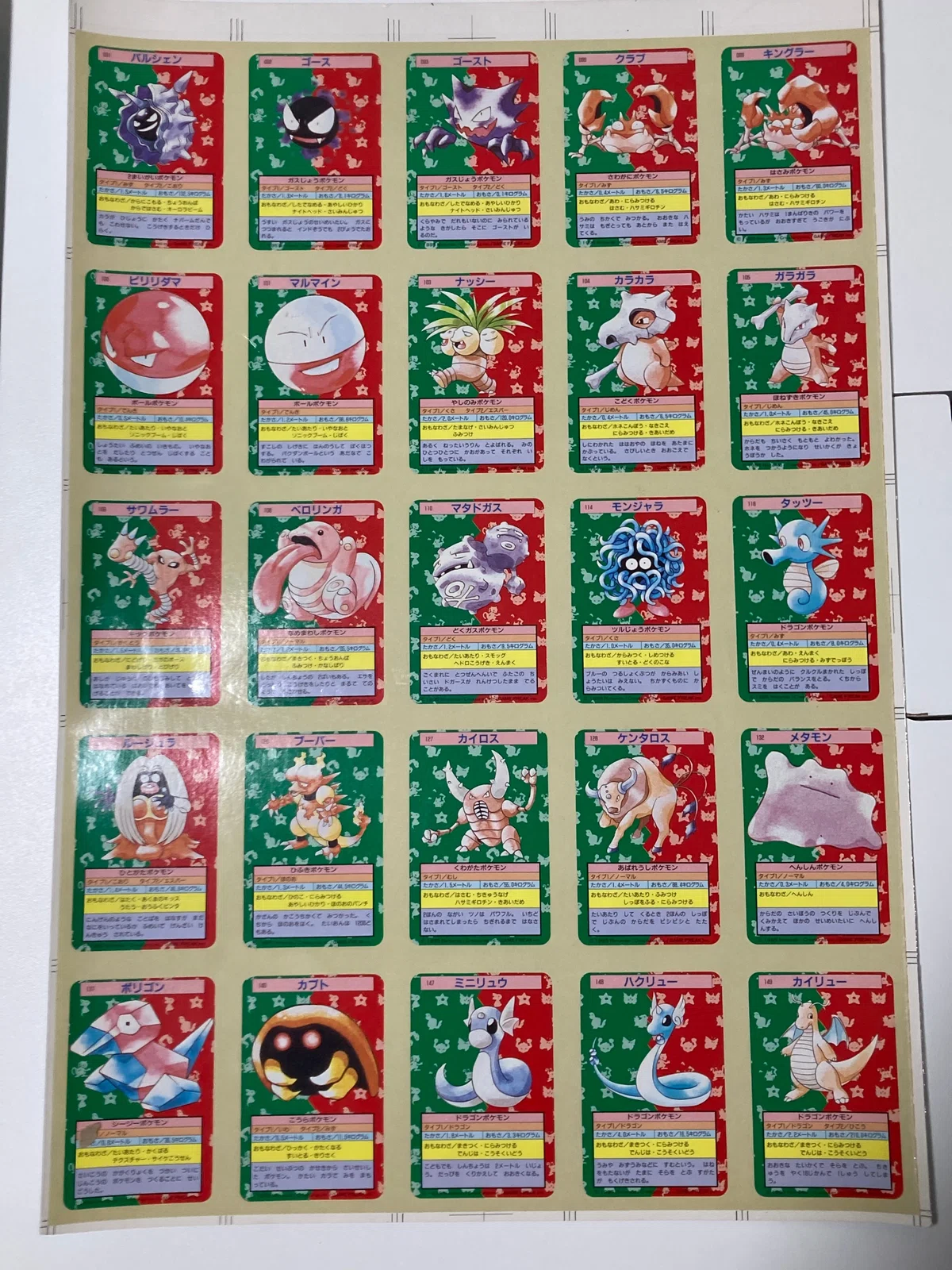
For years, the biggest mystery in the collector community was why only 50 specific Pokémon were printed as errors—for example, why Bulbasaur and Squirtle existed as No Number errors, but Blastoise did not. On January 2, 2023, a photo of a factory uncut sheet (a printed sheet before being cut and having its corners rounded) suddenly surfaced on social media. The 5x5 grid sheet perfectly displayed the 50 error-selected Pokémon in a systematic layout, proving once and for all that the mystery stemmed from early manufacturing printing plate layouts.
The Mystery of the Prism Card "Top" Notation
The depth of the Topsun collection extends beyond normal cards. The logo on the upper back of the 16 Prism (holographic) cards typically reads "Topsun" (トップサン). However, extremely rare copies exist where the logo simply reads "Top" (トップ).
Because the text is printed incredibly crisply without any fading or bleeding, this is widely believed to be an intentional early-lot test specification rather than a simple misprint or plate misalignment. This "Top logo" variation has a very low circulation rate and tends to trade at higher premiums than the standard logo. Combined with other background design quirks (like the difference between polygon and square foil patterns), it remains a fascinating puzzle for collectors.


Market Value and the Romance of Discovery
Riding the wave of global Pokémon popularity, Topsun card prices have skyrocketed. According to records from the "Trading Card Journal," a PSA 10 No Number Charizard was sold at auction for 2,301,000 yen, with a PSA 9 fetching 1,401,000 yen. A complete 150-card set of Blue Backs was also sold at the major US auction house Goldin Auctions for $6,000.
Recently, popular Japanese YouTuber "Kimagure Cook" posted a video showing him discovering two of these "No Number Charizard" cards inside his old childhood collection binder. Furthermore, when he opened a 20-year-old sealed Topsun pack on camera, the degraded old gum was heavily stuck to the card. However, thanks to the strong glossy coating unique to early prints (Blue Backs / No Numbers), he demonstrated that the residue could be cleanly wiped away with a damp wipe.
(A scene from the video where he opens a 20-year-old Topsun gum pack and pulls a Blue Back card.)