No Tipping Required! Essential Manners and Local Rules for Dining in Japan
While no tips, free water, and surprise appetizers might seem different from what you are used to, these rules are all born from Japan's long history of hospitality and fairness. Keep these simple tips in mind, and you will be able to navigate the vibrant Japanese food scene with absolute confidence. Eat well, drink up, and enjoy your time in Japan!
One of the greatest joys of traveling to Japan is undoubtedly the food. From high-end sushi counters to lively, local izakayas (Japanese pubs), the country is packed with incredible culinary experiences.
However, Japan has a unique dining culture and deep-rooted rules of omotenashi (hospitality) that can sometimes confuse first-time visitors. Before you grab a table, here are the essential manners and local rules you need to know for a smooth and enjoyable dining experience!
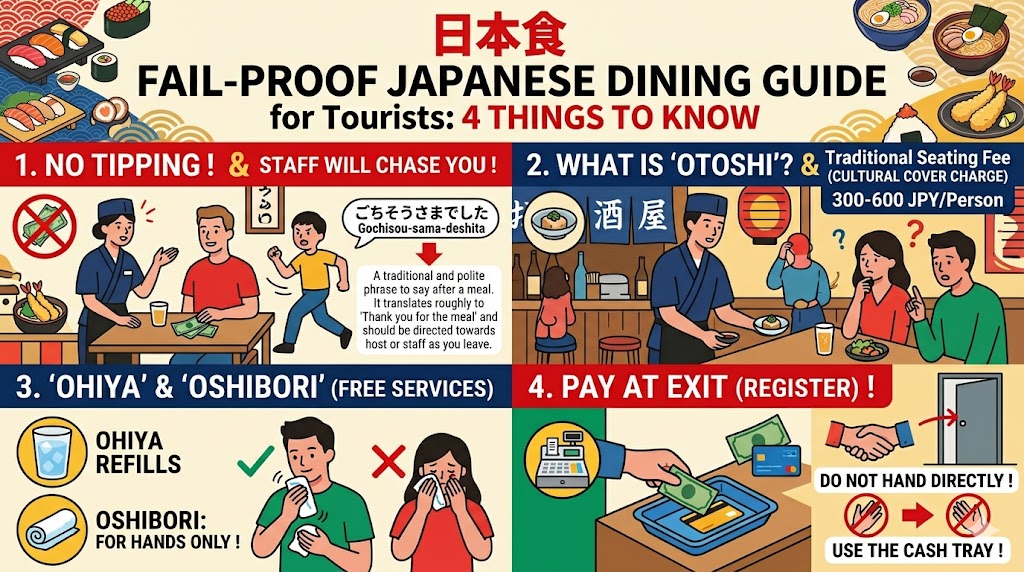
1. Japan Has a Strict "No Tipping" Culture
Unlike in the United States or parts of Europe, there is absolutely no tipping culture in Japan.
No Need to Force It: Whether you are dining at a Michelin-starred restaurant or a casual neighborhood cafe, excellent service is already included in the price of your meal. You do not need to calculate a percentage to leave behind.
What happens if you leave money? If you leave cash on the table as a tip, the staff will likely think you forgot your change and chase you down the street to return it! If you want to show your appreciation for great service, simply offer a warm smile and say, "Gochisou-sama deshita" (Thank you for the meal) as you leave.
2. The Izakaya Mystery: What is "Otoshi"?
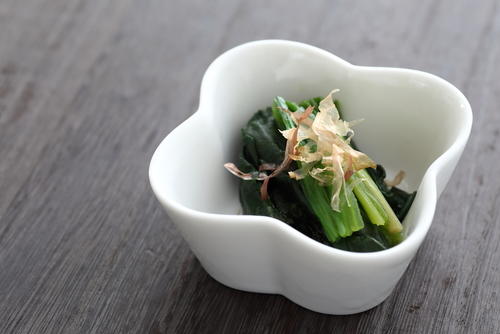
When you sit down at an izakaya (a Japanese-style pub), the staff will often bring you a small appetizer dish before you even order anything. This is a traditional system known as "Otoshi" (or Tsukidashi in western Japan).
A Cultural Cover Charge: This small dish is not free. It functions as a mandatory table charge or seating fee for the establishment. It usually costs anywhere from 300 to 600 JPY per person, and the dish changes daily.
Usually Cannot Be Refused: Because it acts as an entry fee to the pub, you generally cannot refuse the otoshi. Rather than viewing it as a forced charge, think of it as your first taste of authentic Japanese pub culture. Enjoy the surprise dish!
3. The Best Free Services: "Ohiya" and "Oshibori"
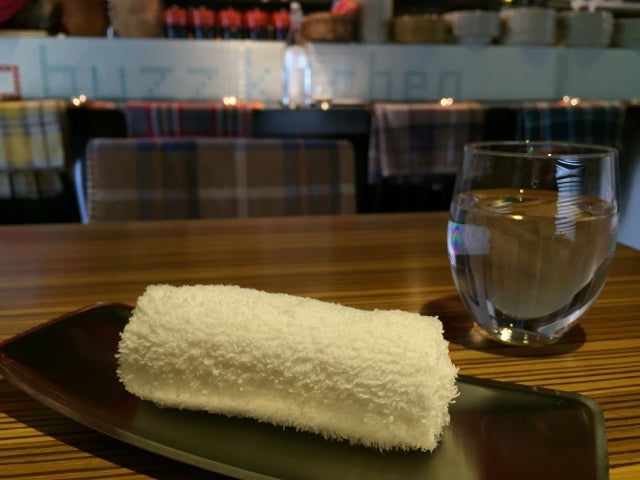
As soon as you take your seat at almost any Japanese restaurant, you will be greeted with two fantastic, completely free services.
Ohiya (Water): In Japan, a glass of ice water (or sometimes hot tea, depending on the season) is provided completely free of charge. Refills are also free, so drink up!
Oshibori (Wet Towel): You will be handed a rolled-up wet towel—either hot or cold—to clean your hands before eating. This is a staple of Japanese hygiene and hospitality. Etiquette Tip: The oshibori is strictly for wiping your hands. It is considered bad manners to use it to wipe your face, neck, or the table.
4. Paying the Bill (Checkout Manners)
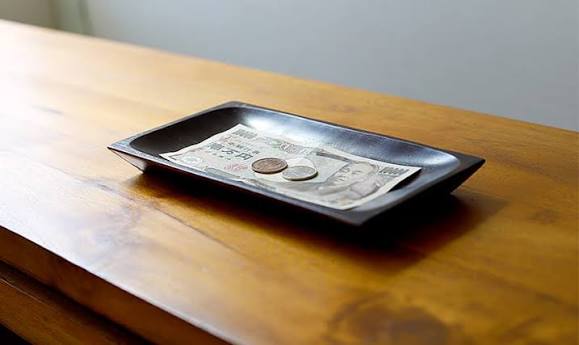
Pay at the Register, Not the Table: While it is common overseas to ask for the check and leave cash on the table, most Japanese restaurants require you to take your bill to the cashier register near the exit to pay. (Note: Some high-end restaurants or specific bars may do table service checkout, but the register is the standard).
Use the Cash Tray: Just like at card shops and convenience stores, do not hand your cash or credit card directly into the cashier's hands. Place your payment into the small plastic or metal tray provided at the register.