Cracking the Code: A Guide to Card Conditions (Ranks A/B/C) and Price Tags in Japanese Card Shops
Thanks to Japan's rigorous grading system, collectors can shop with absolute confidence. And if you are the type who doesn't mind a microscopic flaw, opting for "Rank B" or "Kizu-ari" cards is an incredible hack to get rare chase cards at a fraction of the price. Always remember to ask the staff "Joutai wo kakunin shitemo ii desu ka?" (Can I check the condition?) before buying, so you can inspect the card with your own eyes and leave with zero regrets!
As you browse the showcases at TCG shops in Japan, you might notice that the exact same card can have vastly different prices. Japan's card condition checking (grading) is famously among the strictest in the world—even the tiniest, almost invisible flaw can significantly drop the price.
In this guide, we'll explain the "Condition Ranks" and decode the Japanese text written on price tags. Mastering this will help you score your dream cards like a pro!
1. Basic Condition Ranks (S / A / B / C / D)
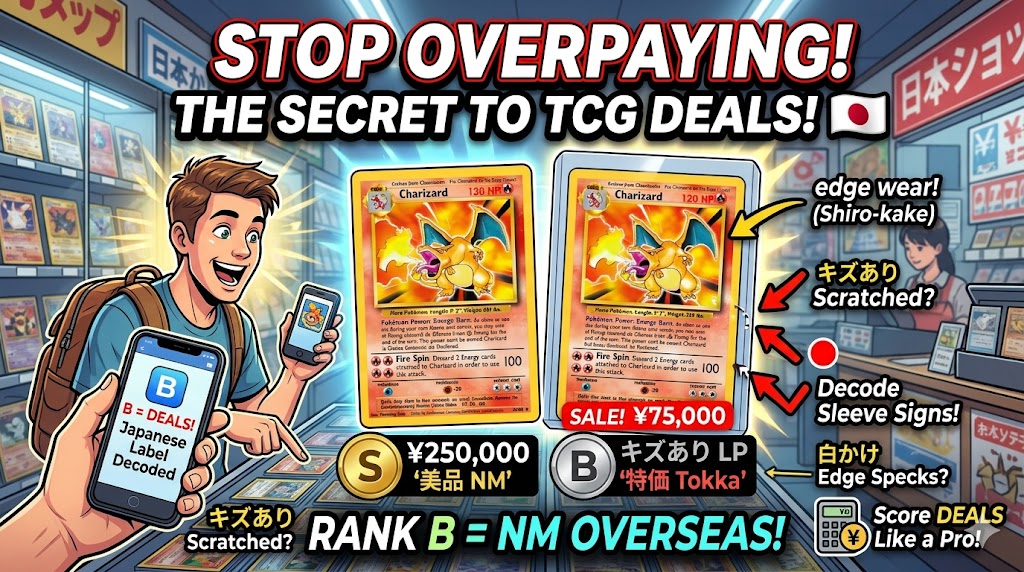
Most shops grade their cards using an alphabet system. Because Japanese grading standards are incredibly strict, a "Rank B" in Japan would often be considered "Near Mint (NM)" overseas!
Rank S
Unopened or completely pristine condition.
Rank A / 美品 (Bihin)
Near Mint (NM) to Mint. No visible scratches; perfect for grading or high-end collections. If a card in the showcase has no specific condition written on the tag (sold at normal market price), it's usually safe to assume it is Rank A.
Rank B
Lightly Played (LP). Has very minor scratches or tiny white specks on the edges (whitening) that you might only see upon close inspection. They look perfectly fine in a binder and are noticeably cheaper than Rank A, making Rank B the most highly recommended rank for tourists looking for a great deal.
Rank C
Moderately Played (MP). Has easily visible scratches, bent corners, or surface scuffs.
Rank D
Damaged (HP). Has major creases, water damage, or tears. Strictly for people who just want the absolute cheapest playable copy.
2. Must-Know Japanese Condition Keywords
Sometimes, tags use Japanese words instead of letters. Keep an eye out for these essential terms:
キズあり / 傷あり (Kizu-ari)
Meaning: Scratched / Damaged. The card is discounted due to surface wear.
白かけ / 白カケ (Shiro-kake)
Meaning: Whitening / Edge wear. The ink has chipped off the edges or corners of the card, revealing the white paper underneath. This is the #1 flaw Japanese collectors check for.
特価 (Tokka)
Meaning: Special Price / Discount. The card is heavily discounted, either because it has flaws or because it is part of a store sale.
プレイ用 (Play-you)
Meaning: For Play Use. The card is meant to be played in a deck rather than kept in a pristine collection, meaning it likely has noticeable wear.
3. Decoding Price Tags and Sleeve "Signs"
Japanese shops have unique and helpful ways of displaying information on the cards in the showcases.
① "Signs" on the Sleeves (Stickers and Arrows) You might notice tiny colored circular stickers (like 🔴 or 🔵) or hand-drawn arrows (↙️) on the clear plastic sleeve protecting the card. This is a helpful hint from the shop pointing exactly to where a scratch or whitening is located! Pay close attention to that specific spot before buying.
② "Cash Only" (現金のみ / Genkin-nomi) For extremely high-end rare cards or heavily discounted "Tokka" items, the tag might say 現金のみ (Genkin-nomi). This means Cash Only. Because the shop has slashed the price so much (cutting into their profit margin), they cannot accept credit cards due to processing fees. It is always a smart idea to carry enough Japanese Yen in cash just in case!
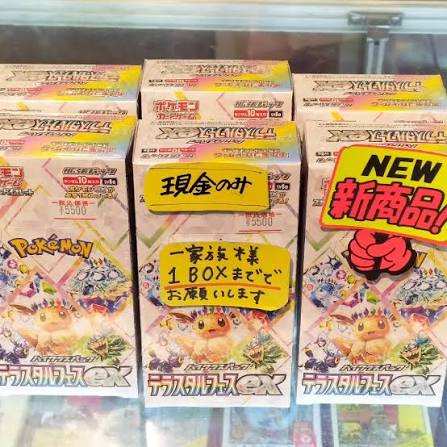
③ Color-Coded Tags Many stores use colored tags to indicate condition at a glance (e.g., White tag for Mint, Yellow tag for damaged, Red tag for Special Sale). Look for a small sign in the corner of the showcase explaining the store's color-coding system.
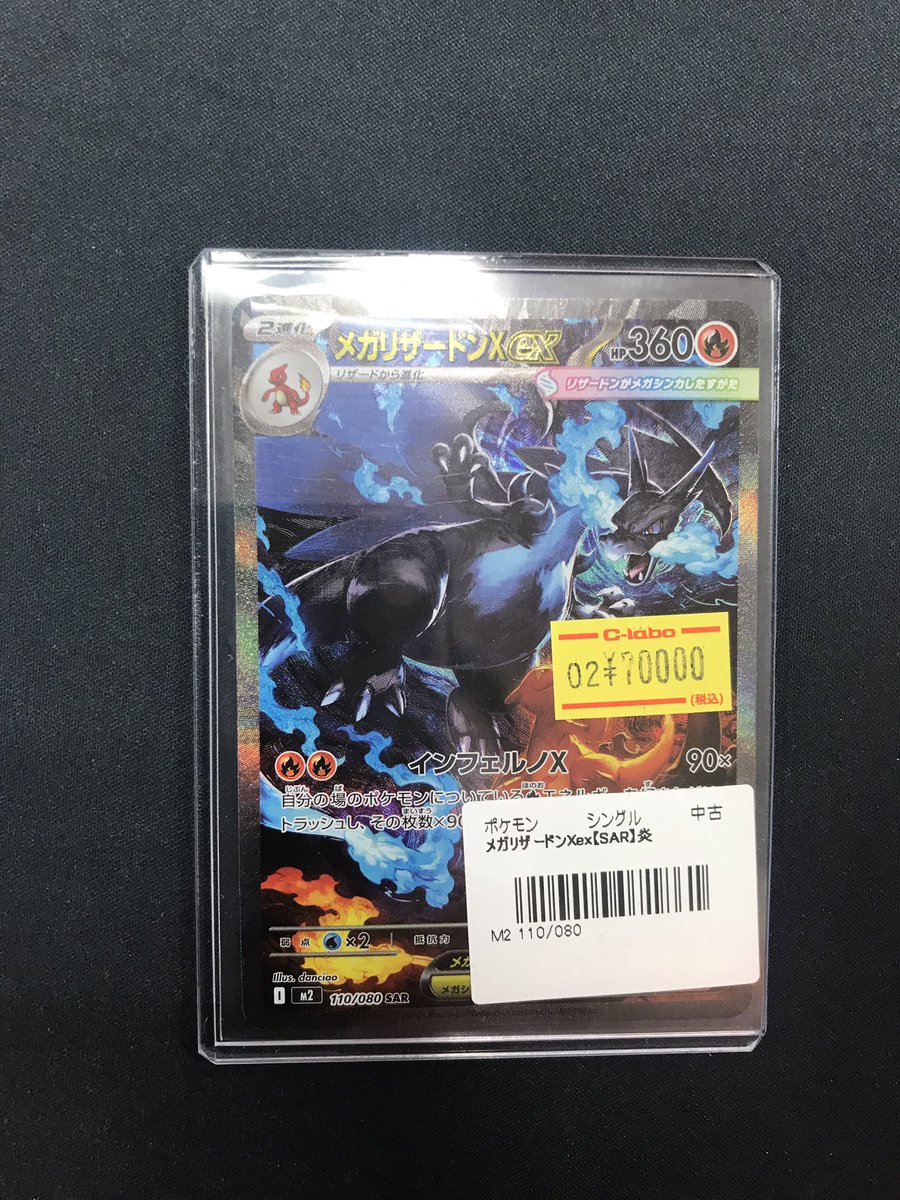
④ Tax Included vs. Tax Excluded Check if the price on the tag says 税込 (Zeikomi - Tax Included) or 税抜 (Zeinuki - Tax Excluded). Japan’s consumption tax is 10%. If you are using the Tax-Free shopping service, you will pay the "Zeinuki" (Tax Excluded) price.